
Winter SPARKS (Chicago) – Notes on the Program
The Golden Age of Concerti
by Alan Choo & Jeannette Sorrell
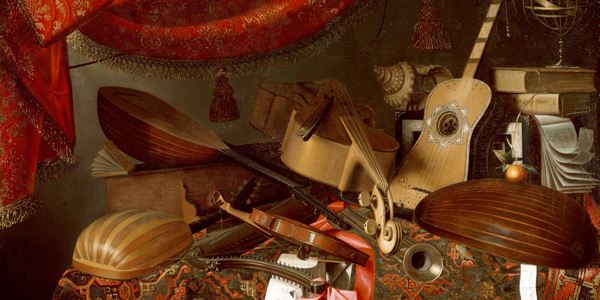
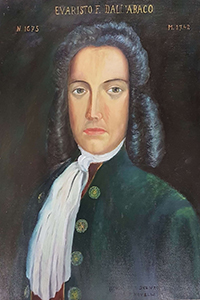
The Passepieds from his Concerto à piu strumenti (“concerto for multiple instruments”) is a classic example of a composer writing in the French musical style within an Italian genre. The Passepied is a brisk dance in triple meter, here appearing as a pair of dances in minor and major keys, with a reprise of the first passepied after.
For six years (1717-1723), Johann Sebastian Bach led one of the two finest orchestras of Germany. As music director at the palace of Köthen, he presided over a small but excellent orchestra of musicians who had formerly worked at the palace of Berlin. The prince of Köthen had successfully recruited these musicians from Berlin. The Berlin-Köthen musicians inspired in Bach an outpouring of virtuoso compositions for small orchestra. These pieces have become amongst the most beloved orchestral works in the world – the Brandenburg Concertos, the orchestral suites, and the violin concertos.
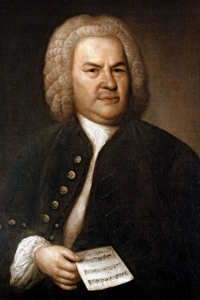
by Elias Gottlob Haussman
The opening Overture follows the classic French style, featuring a grand opening and closing section of dotted rhythms, sandwiching a fast, fugal middle section. The flute often doubles the first violins but breaks away for virtuosic episodes. The Rondeau is a graceful dance characterized by a recurring theme interspersed with contrasting episodes, providing a sense of balanced, courtly symmetry. The Sarabande is a slow, stately dance in triple meter. Bach employs a canon here — the bass line follows the melody exactly but at a different interval, creating a dense, emotive texture.
The pair of Bourrées are lighthearted, earthy dances, featuring the flute in a playful display of virtuosity in the second Bourrée. The Polonaise pays homage to the Polish folk dance, followed by its Double – its variation whereby the continuo section maintains the Polonaise theme while the flute performs a dazzling, continuous stream of sixteenth notes above them. The penultimate Menuet is elegant and understated, serving as a momentary breath of air before the high-energy finale. The closing Badinerie gets its name from the French word badiner (to jest or trifle). This is the suite’s most famous movement—a lightning-fast display of flute virtuosity that has made its way to become a staple of popular culture.
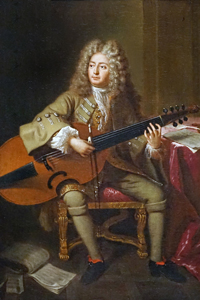
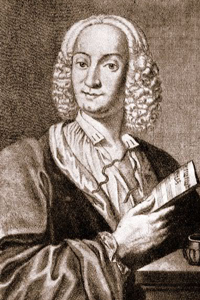
by Atelier d’André Bouys
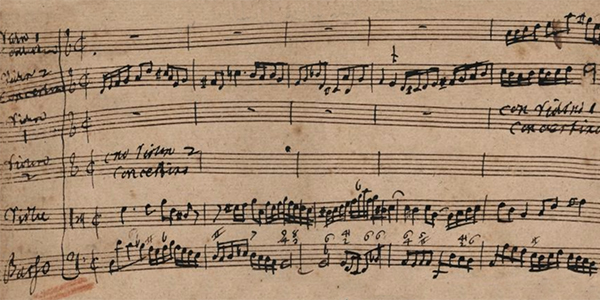
Vivaldi’s Concerto in F major, RV 572, an example of a “concerto for multiple instruments,” is an arrangement of an earlier concerto for just violin and cello, RV 544, with the same subtitle of “Il Proteo o sia il mondo al rovescio” (Proteus, or the World Turned Upside-Down). The latter phrase is a popular Baroque trope often associated with Carnival, where social and natural orders are inverted. In its original form of RV 544, Vivaldi turns the world “upside down” by writing the violin part in the bass clef (as if it were a cello) and the cello part in the treble clef (as if it were a violin), letting them occupy tonal registers that subvert traditional expectations. The evocative drone of the viola throughout the first movement acts as the central axis in the middle of the score, becoming the horizontal axis of this mirror where the two soloists switch roles. The viola drone is also widely interpreted to represent the shape-shifting god Proteus, whose omnipresence is felt through his ability to take different forms.
Vivaldi later expanded RV 544 into a concerto that also included solos for flute, oboe and harpsichord. Recent research suggests that this expanded version (RV 572) may have been prepared for the orchestra of Cardinal Pietro Ottoboni in Rome. Ottoboni’s ensemble was one of the few in Italy at the time that could boast the specific “extra” wind players and virtuoso harpsichordist required. Whilst the original “upside down” switching of the violin and cello ranges went away with this version, Vivaldi gained access to the tonal colors of more instruments as soloists pair up to engage in friendly conversation and dramatic sparring.
©2026 Alan Choo & Jeannette Sorrell
Singapore & Cleveland, OH